The 30% Rule: How to Price Menu Items Without Leaving Money on the Table
If you're guessing at your menu prices, you're probably losing money without knowing it. The difference between a profitable dish and one that drains your register comes down to one number: your food cost percentage. Here's how to calculate it, use it to price smartly, and build a menu that actually pays you.
What Is Food Cost Percentage—and Why It Matters
Food cost percentage is the ratio of what you spend on ingredients to what customers pay you. The formula is simple:
Food Cost % = (Total Cost of Ingredients ÷ Menu Price) × 100
For example: if a sandwich costs you $3 in ingredients and you sell it for $12, your food cost is 25%. If the same sandwich costs $6 in ingredients, your food cost jumps to 50%—and you're making half the profit.
Most successful independent restaurants in the Chambersburg to Hagerstown corridor aim for a food cost between 28% and 35% on average across their menu. (Some items run higher, some lower—more on that below.) This range leaves room for labor, rent, utilities, and, crucially, your take-home pay.
If your food cost creeps above 40%, you're working for your suppliers, not for yourself.
The Weekly Audit: Finding Where You're Leaking Money
You don't need expensive software to start. Pull receipts from last week and pick three of your bestselling items. Write down:
- Every ingredient in the dish (including oils, seasonings, and sauces—don't skip the "cheap stuff").
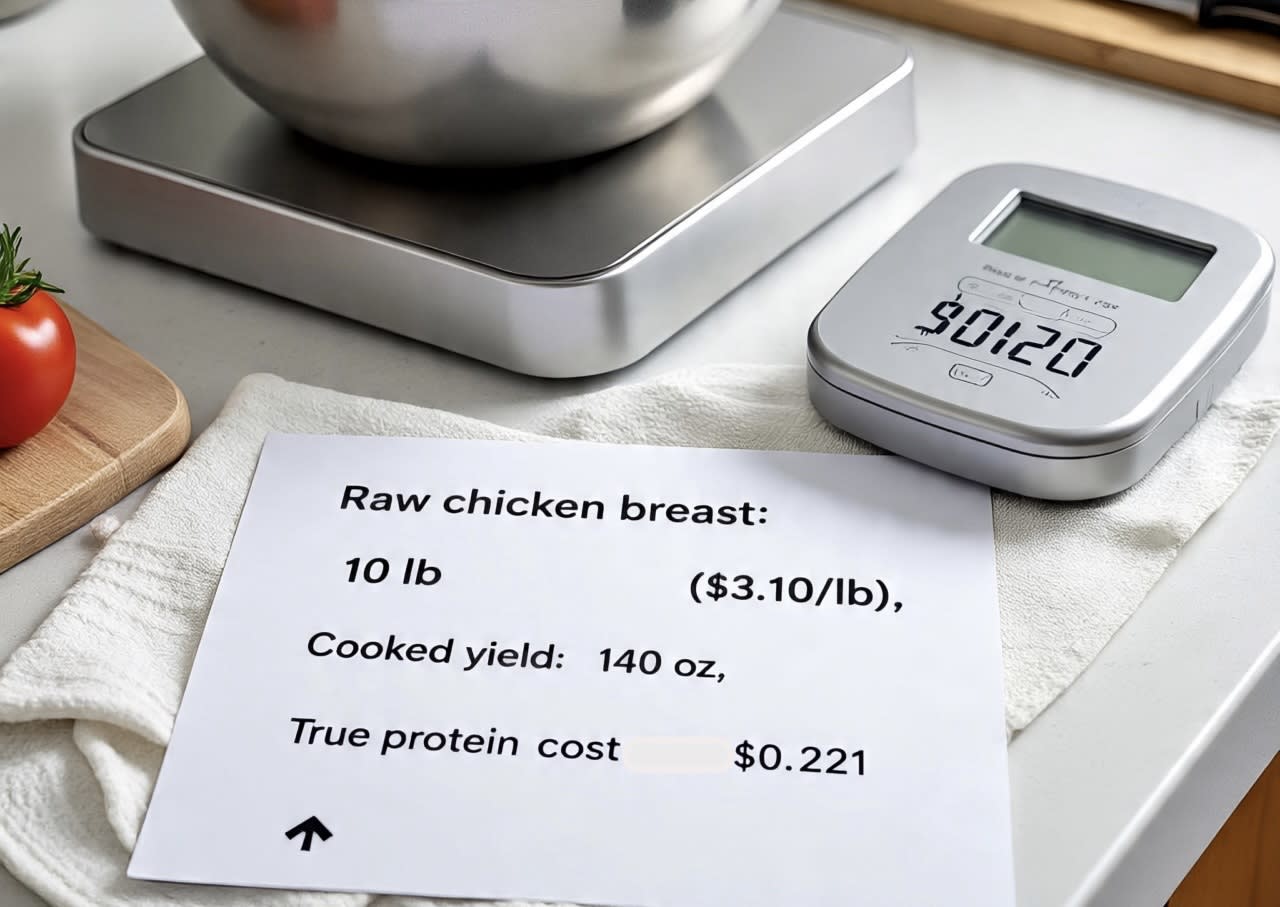
- Exact weight or count of each ingredient per serving (use a kitchen scale; guessing is why you're here).
- Your cost per unit from your most recent invoice.
Multiply ingredient cost × quantity per serving. Add them up. That's your total ingredient cost.
Now divide by your menu price. If you're over 35%, flag that item.
Example: Pulled-Pork Sandwich
- Pulled pork (4 oz): $2.10
- Bun: $0.35
- Coleslaw (2 oz): $0.40
- Sauce (1 oz): $0.15
- Total: $3.00
- Menu price: $10.50
- Food cost: 28.6% ✓ (healthy)
Compare that to:
- Same sandwich, ingredient cost $4.20, menu price $10.50 = 40% food cost ✗ (you're leaving profit behind)
Do this for five dishes this week. You'll spot patterns—maybe your supplier raised meat prices, or your portion size drifted, or you're using an expensive ingredient without realizing it.
Portion Control: The Silent Profit Killer
Here's the hard truth: portions creep. A generous hand on day one becomes the customer expectation. That extra 0.5 oz of protein on each order adds up to hundreds of dollars per month.
This week, standardize three dishes:
1. Weigh each component on a kitchen scale before plating.
2. Write it down (literally tape it near your prep station).
3. Train anyone making that dish to hit the number.
4. Check portions again in two weeks.
If your coleslaw portion was supposed to be 2 oz and you're actually plating 2.5 oz, you're giving away 25% more product. On 100 sandwiches per week, that's an extra 50 oz of cabbage, mayo, and vinegar—money walking out the door.
Portion control isn't stingy; it's sustainable. Consistency also makes customers happier because they know what they're getting.
Using Fusion Serve's AI Menu Tools to Lock In Your Numbers
Fusion Serve's AI menu tools let you input ingredient costs and portion sizes once, then automatically calculate food cost percentage for every dish. When you update a supplier price, the system recalculates instantly. No more spreadsheets collecting dust.
More importantly: when you're listing your menu on Fusion Serve, you have a live record of what you're actually charging versus what it's costing you to make. If a dish consistently runs high food cost, you can:
- Adjust the portion
- Find a cheaper supplier
- Raise the price slightly (test it on Fusion Serve first with our ordering data)
- Remove it
You're not guessing. You're managing.
The Menu-Engineering Play: Not All Dishes Are Equal
You don't need every item to hit 30%. Instead, think menu balance:
- Hero dishes (high-volume, lower food cost): Your pulled-pork sandwich at 28%—this builds loyalty and justifies the order.
- Margin makers (lower volume, higher price, 20–25% food cost): A specialty burger with premium toppings at $16 might cost $3.50 to make. You sell three a week, but they're pure profit.
- Loss leaders (break-even or slight margin): A side salad at 40% food cost—you don't make much, but it upsells the combo.
The average across your whole menu should still land in the 28–35% range. You're not sacrificing profit; you're being strategic about where profit comes from.
Next Week's Action Plan
1. Pick three bestsellers. Scale and cost them.
2. Standardize portions. Weigh, write, train.
3. Log into Fusion Serve's menu dashboard. Input those costs. Watch the food cost % calculate.
4. Set a reminder for two weeks from now. Check three more dishes. Make it a habit.
Takeaway
Pricing by feel is how restaurants fail quietly. Pricing by numbers is how they survive and thrive. Your food cost percentage is the single clearest window into whether your menu is making money or costing you sleep.
Fusion Serve offers flexible commission plans starting at 20% per order, with a prepaid 0%-commission option available from $299 per location. Combined with AI menu tools, you keep more of what you earn and have the data to prove it. Start with one audit this week. By this time next month, you'll have a menu you actually understand—and a profit margin that reflects the hard work you put in.